
If you know us or have seen the truck up close you’re probably wondering to yourself, “what in the hell is up with all this crap under your truck”? Well, you are right to question us and we are happy to answer! If you haven’t seen this on either our Instagram page (DMG_Overland), Facebook or haven’t seen the truck period and can’t imagine what we are talking about, take a peek under a stock Toyota Tacoma, or for that matter, any Tacoma. Chances are you will find a black suspension system with shocks that are silver and black or yellow and blue.

Now let me be crystal clear, there is NOTHING wrong with the stock suspension of a Toyota Tacoma. The Toyota Tacoma has been the truck of choice for U.S. Special Forces operating in combat zones like Afghanistan for years. It offers them the discretion needed of a plain truck over a HMMWV (humvee to you civilians) while giving them the offroad capabilities of a proven platform. That being said, let’s get into why we spent 1/3 of the price of the truck on replacing the suspension!

In case you don’t want to read anymore of my offroad foreign language that sounds like a 12 year old trying to explain Star Wars to his 90 year old grandpa, let me put it in a nut shell. It’s all about keeping the tires on the ground as much as possible, creating a MORE offroad capable vehicle and of course being super comfortable all the while being safe on and offroad. If the tires are touching a surface rather than being limited and not touching, you are getting traction and in our case traction is good. Let’s all say that together, “Traction is GOOOOOOOD”.

This all breaks down into basically 2 sections, the shocks, coilovers, leaf springs and everything else. All of these components (what we are using) together create what is known as long travel. Have you ever seen a trophy truck run the Dakar or the Baja races? Yea, well think that, but not as cool and more multipurpose. Let’s cover the shocks first.
We decided to strip out the stock Bilstein shocks and replace them with King Shocks. Not only did we choose King for their tested and proven reliability in multiple environments, but also because they are on the progressive side of the linear shock chart. There is no way I’m going to attempt to explain this to you but if you are interested, watch this video.
Kings are also proven to last longer and offer a nice buttery ride, exactly what we wanted while traveling on back country roads around the country. Within the King family of shocks, we chose remote reservoir shocks over emulsion shocks. Both are filled with nitrogen and oil but the emulsion shocks allow the two components to mix. Nothing wrong with that, but having the two separate from each other keeps the ride from being mushy and offers more control. The remote resevoir that is connected by a high pressure hose is filled mostly with nitrogen and a small amout of oil but the two are seperated by an internal piston. When the shock shaft moves into the shock tube, the oil is compressed and needs a place to go. That extra oil back flows through the hose and into the tube compressing the nitrogen.
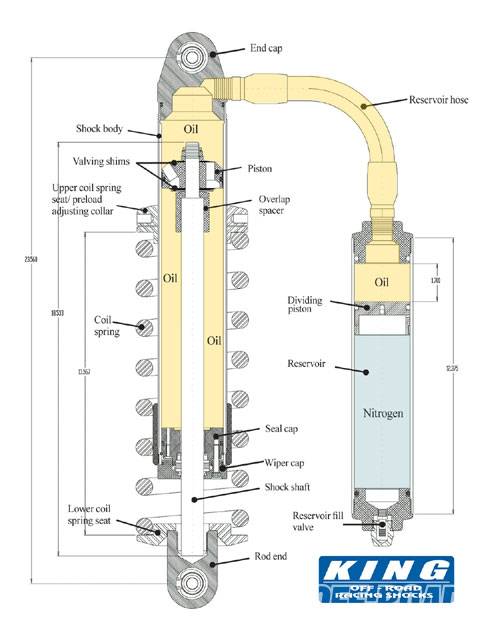
A lot of people, including myself at one time, think that the shocks support the weight of the truck. Well, that is just not true and if you did this, the weight of the truck would compress the shocks to the point of a blow out, destroying the shock. Think of the shocks as a marshmallow between your thumb and index fingers. Without it, your fingers easily and quickly slap together but with it they softly and gently squeeze together. Now imagine squeezing your fingers together until the marshmallow cuts in half, that is the shock blowing out. How do you stop that? Enter coilovers and leaf springs.
The shocks are essentially the exact same but the front have coilovers, a giant metal spring or coil that fits over the shock and keeps it from being squished like that marshmallow. The rear shocks work in conjunction with a leaf spring, a series of giant flat bars stacked on top of one another to support the rear weight of the truck. Both the coilovers and leaf springs limit up and down travel.
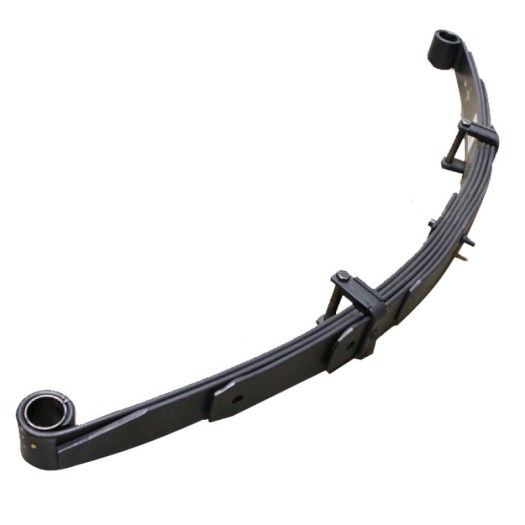
These huge chunks of metal (coilovers and leafspings) act like a slightly bent paperclip between your fingers and the marshmallow. Eventually they will stop the truck body from moving against the axles and control arms. As added protection, we throw in bump stops that will be the last resort and keep the shocks from “bottoming out”.
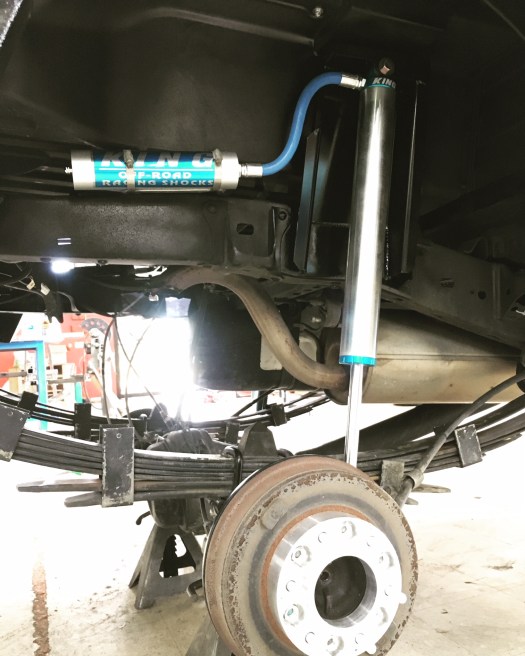
On the other side of the equation, you can also damage the shock from pulling it apart. During what is called “down travel”, where the wheels travel down but the truck body is going up, the wheels have no way of stopping and would continue to do so. But, we have something for that. Small pieces of nylon seatbelt looking material bolted onto the lower control arm and the frame called “limiting straps” stop the wheel from traveling so far down that it destroys the front coilover shock. The OME leaf springs provide the limit to the rear down travel and because the rear shocks are King 14″ remote resevoir shocks mounted on an Archive Garage shock relocation kit, the rear can travel longer based on the down travel of the leaf springs. Coupled with an Archive Garage shackle flip, we have increased down travel but slightly minimized up travel.
This brings us to the last few parts of the long travel suspension, the upper and lower control arms. I won’t go into the long and drawn out details of how they connect to the spindles, the uniball joints, the bushings, yada, yada yada. What I will point out is the added strength that these parts bring to the suspension system. The basic idea of a long travel kit is to provide excellent dampening to the rough conditions you would experience at higher speeds while driving offroad, so naturally, the parts must be built better to handle these conditions. Well, I can tell you right here and now, that NO, I wont be running this overweight behemoth over any whoops or washboards. What we will be doing is driving in places that would benefit from a more comfortable suspension, better articulation of parts (longer travel up and down, aah ha, you get it now) and superior parts. The Total Chaos +2 (+2 inches to the over all stock wheel base) kit we are running includes a 2″ tubular 4130 Chromoly Upper control arm with 1″ heat treated stainless steel uniballs and a boxed and internally gusseted lower control arm, both powder coated. Along with things like extended stainless steel brake lines, extended CV axles, welded on cam tabs, and nylon locking nuts, we are confindent that this suspension system will meet any requirments that we have or any obstacles that we may encounter.
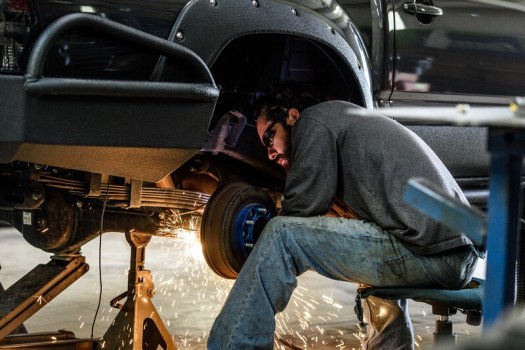
Installing a kit like this is no easy task nor should it be taken lightly. South East Overland (SEO) out of Seneca, South Carolina was chosen amongst many, including a 4 Wheel Drive shop right down the road, to put this kit on. Simply using a company or doing it yourself because they or you have a base line knowledge of offroad vehicles is not the way to address something like this. Besides your motor, transmission and drive-train, the suspension is one of the most important vehicle parts and in my opinion is THE most suseptible to creating dangerous conditions. Even the experts at South East Overland ran into difficulties with taking apart the CV axles to put in the new extended axles and only after multiple attempts and a brand new set was the issue able to be corrected. None of this would have been possible with me and my buddies beating on them with hammers in the garage. If you decide to go long travel, please consult an expert and if their first response is “Long travel, yea, I think I know what youre talking about”, just hang up and call someone else.

While at SEO, we removed the sway bar. Now let’s take a minute and talk about that monumental decision. The sway bar is an anti-roll device that links the two front wheels together via a torsion spring and bar. This helps adjust for sharp cornering, sudden high speed movements and road irregularities but it also dramatically hinders the front independent suspension. When the right wheel goes up, it basically drags the left wheel up like your friend falling down during the 3 legged race and dragging you with him. Simple solution, cut the rope and let your idiot friend fall on his own. You on the other hand, help him up and still win the race. It’s odd at first, you feel everything your truck is doing, and even to this day you find yourself drifting a little and rocking side to side but like everything else, you adjust and before long you start to think you’re Jordan Brenthel going to get a gallon of milk in your Monster trophy truck. When it comes to swerving for a deer, DON’T!!! Buy a steel bumper and send bambi into low earth orbit. We will cover that later, the steel bumper that is, not the Astronaut Deer Program.

When we rebuilt the rear suspension, SOS Off-road out of Laurens, South Carolina was my first choice. Eddy knows Tacomas like the back of his hand. The math involved in shock relocation can make your truck an offroad beast, or you could be replacing shocks every few months. Just like a tattoo or a bottle of whiskey, you pay for what you get. If you’re fine with a happy face tattoo and a handle of swill, drink up bucky, but if you want award winning Japanesse whiskey smooth as super model’s butt and a work of art embedded into your epidermis, OPEN THE WALLET!
I hope this explains our suspension system. Its a basic explanation and I probably got a few things wrong or left something out but there is bound to a be a key board mechanic to correct me. If you have any questions, please feel free to contact me. Give us a follow on instagram @dmg_overland and keep up with all the adventures, modifications and rediculous stuff we get into.
-Will
Life in the right lane (SLOOOOOWWWWWWWWWWWWWW)

 DMG Exploration